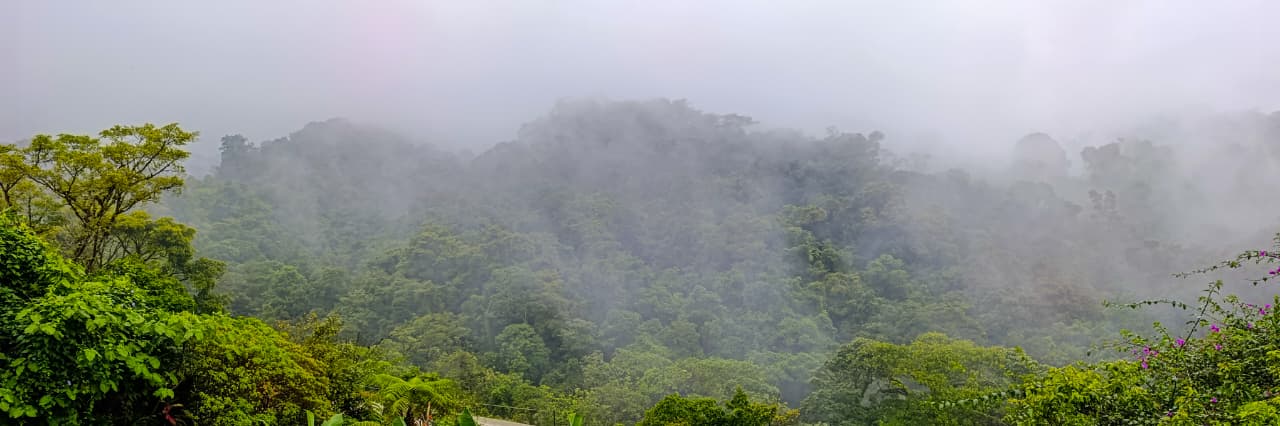
It is raining heavily in Costa Rica today. The kind of rain that changes the sound of the neighborhood, makes the roads shine and, within minutes, turns every patch of forest a little greener.
For someone planning a trip here, that may sound like something to worry about. But rain is not an occasional inconvenience in a tropical country like Costa Rica. It is one of the forces that shapes our forests, rivers, waterfalls and wildlife.
And there is an important detail that is easy to miss when looking at a map: Costa Rica does not have one single rainy season.
The Pacific and Caribbean slopes have very different weather patterns. Sometimes they can almost seem to work in opposite directions. That matters a lot when deciding when to visit, where to go and what to expect from your trip.
That is what makes traveling during the green season interesting. You are not simply choosing between a dry trip and a rainy one. You are choosing how to experience Costa Rica at a particular time of year.
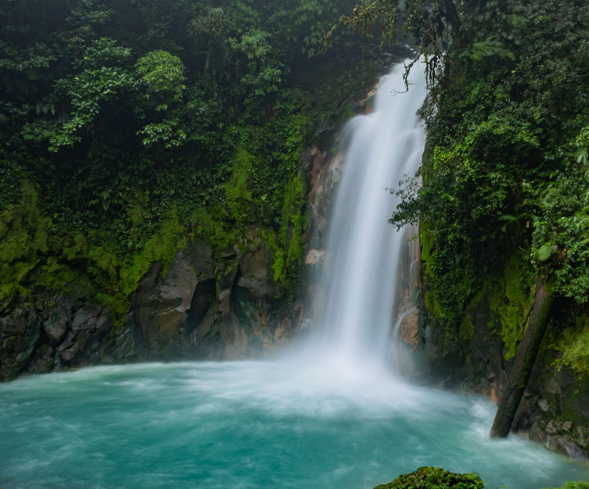
The Pacific and Caribbean Don’t Follow the Same Calendar
Costa Rica’s green season generally runs from May through mid-December, but that description is too simple to be very useful on its own.
On the Pacific side, the rainy season normally runs from May through October, with a relative decrease in rainfall during July and August, known locally as the veranillo. September and October are generally the wettest months, with rain often arriving in the afternoon and early evening.
The Caribbean follows a different rhythm. It does not have a clearly defined dry season, but September and October are relatively drier periods there. In other words, October can be one of the rainiest times on the Pacific while offering some of the better beach conditions on the Caribbean coast.
That is a big advantage when planning a trip.
If you are traveling in October, for example, you do not have to think of the entire country as rainy. You can look at the country differently: where are conditions more favorable at that particular time, and what would you like to experience?
Costa Rica is small enough to travel between regions, but its geography creates very different microclimates. The mountains, elevation, coastlines and prevailing winds all play a role.
Understanding that can save you from making a common mistake: choosing an itinerary exclusively based on destinations without checking the season.
The Green Season Has Its Own Things Going On
There are also experiences that make certain months interesting in their own right.
Take Ostional. Olive ridley turtles nest there throughout the year, but the famous arribadas, when large numbers of turtles come ashore together, are particularly associated with the rainy season, especially from July through November. If wildlife is one of your priorities, that can be a very good reason to consider traveling during these months.
The Caribbean has its own seasonal wildlife experiences. Green turtles begin arriving along the coast between Tortuguero and Parismina from July, while Tortuguero protects important nesting areas for several species of sea turtles.
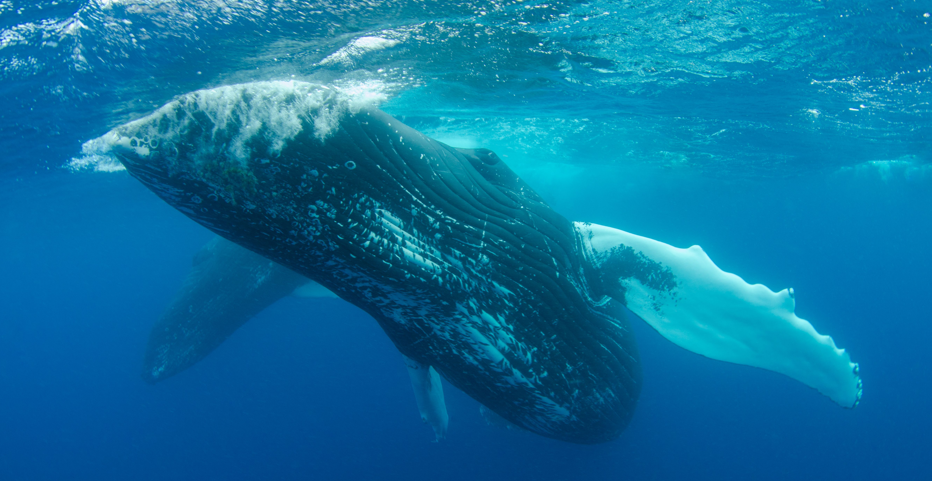
And then there is the Pacific coast and its whales. Humpback whales are present in Costa Rican waters during the second half of the year, making July through October an especially interesting period for whale watching in the South Pacific.
Even the rain itself changes what you can experience. Amphibians become more active during the wet season, and in some areas the sounds of frogs become one of the most noticeable parts of being in the rainforest after dark.
These are good reminders that the green season is not simply a period to endure until the sun comes back and that nature has its own calendar.
And sometimes, the month you initially thought was less attractive, is exactly when something you really want to see is happening.

A Good Green Season Day Has Some Flexibility
If you are traveling during the green season, I would generally put the activities that matter most to you earlier in the day. A hike, wildlife walk, hanging bridges, waterfall, boat excursion or other outdoor activity is usually easier to enjoy when you are not depending on a completely open afternoon.
This is especially useful on the Pacific side, where rain tends to be more common later in the day. It is not a rule that every day will follow, but it is a good way to structure your time.
The difference is subtle. You are not trying to control the weather. You are simply giving yourself a better chance of enjoying the things you came to Costa Rica for. And if it rains later, the day does not have to feel unfinished.
You can take a longer lunch, visit a coffee or chocolate farm, enjoy hot springs, spend some time at the hotel or simply slow down. Some days the rain will pass quickly. Other days it may stay for a while.
That is why I prefer itineraries that have enough structure to make the most of the trip, but enough space to adapt when conditions change.
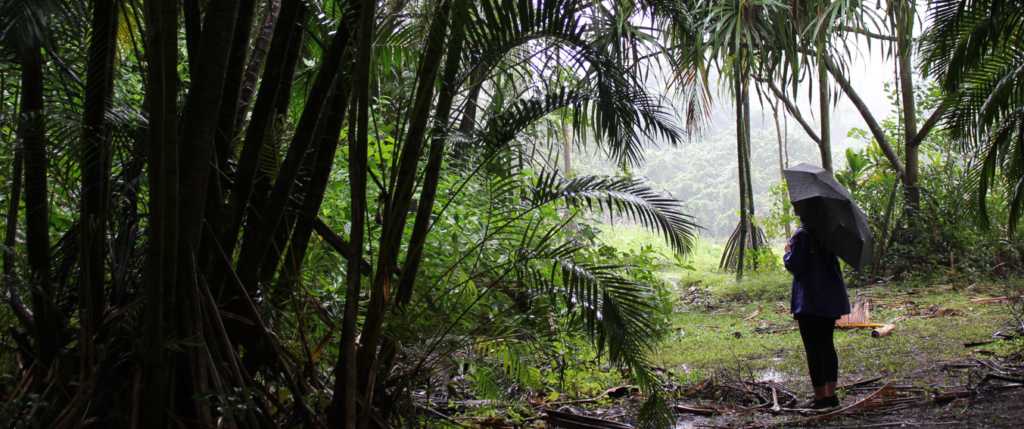
Some Months Call for Different Decisions
The green season is not equally suitable for every destination at every time of year.
This is particularly important in remote areas. For example, if you are planning to visit the Osa Peninsula or Drake Bay in October, I would look carefully at the specific itinerary before making a decision. The South Pacific can receive very substantial rainfall at this time, and access to remote destinations can become more demanding depending on road, trail and sea conditions.
That does not mean you should simply cross Osa off your list. It means that October in Osa deserves a different level of planning than a beach trip to the Caribbean during the same month.
The same principle applies throughout the country. A road that is easy during the dry season can take longer after heavy rain. A rural access road may become difficult. A river crossing or mountain route may require extra caution. A boat excursion can be affected by sea conditions.
This is where checking the actual route matters more than simply looking at the distance between two places on a map.
Sometimes the best route is not the shortest one. Sometimes leaving an hour earlier makes a meaningful difference. And sometimes the right decision is to change the order of the itinerary rather than trying to force a plan that no longer makes sense.
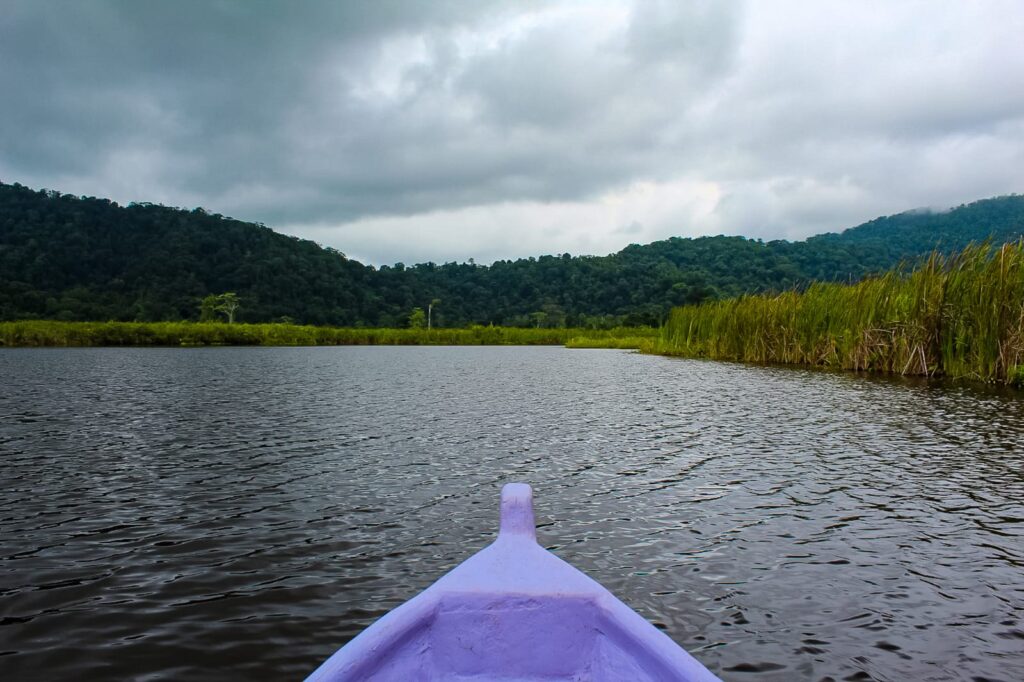
Plan Around the Season, Not Against It
One of the easiest mistakes during the green season is trying to reproduce a dry-season itinerary with a rain jacket added to the packing list, but it is better to make a few small adjustments from the beginning.
Start outdoor activities early when possible. Avoid scheduling several time-sensitive experiences back-to-back. Give longer transfers some margin. Check difficult-access destinations before confirming them. Keep at least a couple of alternatives in mind, particularly if you are traveling in September or October.
And pack for a tropical country: a light rain jacket or poncho, comfortable shoes with good grip, quick-drying clothes, an extra pair of socks and protection for electronics are usually more useful than carrying a huge amount of specialized rain gear.
You will still want sunscreen and insect repellent. In higher elevations, a light sweater can also be useful.
The goal is not to prepare for the worst, it is simply to make sure that a normal afternoon shower does not become the most memorable part of your day for the wrong reasons.
So, Should You Visit Costa Rica During the Green Season?
It depends on the trip you want. If your idea of a vacation requires guaranteed sunny beach days from morning to evening, there are better times to come, particularly for some areas of the Pacific.
But if you want wildlife, rainforest, waterfalls, greener landscapes and a country that feels particularly alive, the green season can be an excellent time to visit.
The important part is choosing intelligently. A July trip does not have to look like an October trip. A September itinerary on the Pacific does not need to look like one on the Caribbean. A traveler interested in turtles may make very different decisions from someone whose priority is spending a week on the beach.
And that is really the advantage of Costa Rica’s climate: You can work with it. The country gives you different possibilities at different times of year. The better you understand them, the easier it becomes to build a trip that feels right instead of simply hoping for good weather.
Experiencing the Green Season
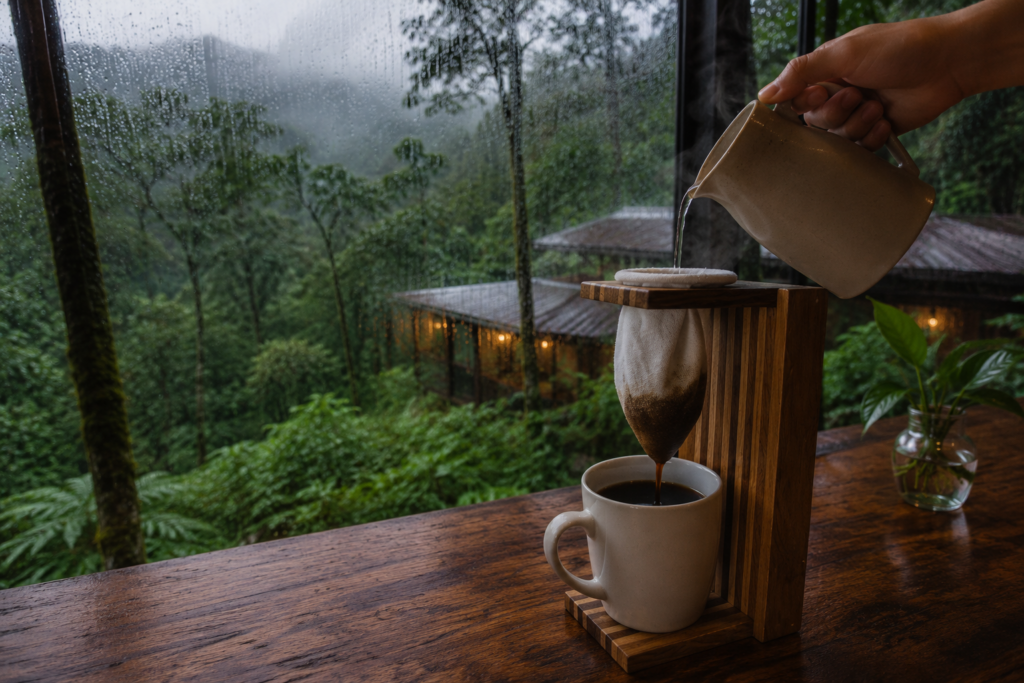
There is something quite satisfying about getting this right. You leave early in the morning while the weather is good and spend a few hours surrounded by nature. You see the animals you came hoping to find, finish a hike before the afternoon rain arrives and sit down for lunch without having to rush.
Later, the rain starts. You hear it on the roof, watch it move across the trees and know that the forest is getting exactly what it needs. Maybe you head to the hot springs. Maybe you stay at the hotel. Maybe the rain stops after an hour and you go back outside.
The next morning, you start again. That is the green season.
Not a version of Costa Rica where you spend your trip trying to avoid rain, and not a guarantee that every day will be sunny. It is simply a different rhythm, and one that can be exceptionally rewarding when the itinerary is built around the time of year.
So if you are considering a trip during these months, do not ask only whether it will rain.
Look at when you are coming, which side of the country makes the most sense, what is happening in nature at that time, and how much flexibility your itinerary needs.
That is usually where the difference between a frustrating trip and a really good one begins.
Complete el formulario a continuación y le responderemos en un plazo de 24 horas.
Comparta los detalles de su viaje para recibir una cotización personalizada de transporte privado de varios días en Costa Rica.
Próximamente
Seleccione su ruta y comparta los detalles de su viaje para recibir una confirmación personalizada de su traslado.
